

"When the women's movement in its first beginnings strove to gain new career opportunities for women, every new place that opened up for women was greeted with enthusiasm. (...) It was only after a few decades, when women's professional activity was secured in the most diverse fields, when earning a living was taken for granted, that considerations of a different kind came to the fore. People began to feel (...) that the working woman, like the working man, must take on new dependencies and ties: dependence on the employer."
(Alice Salomon, 1908, "Frauen als Arbeitgeberinnen." in: Baltische Frauenzeitschrift, vol. 2, June 1908, pp. 1073-1078.)
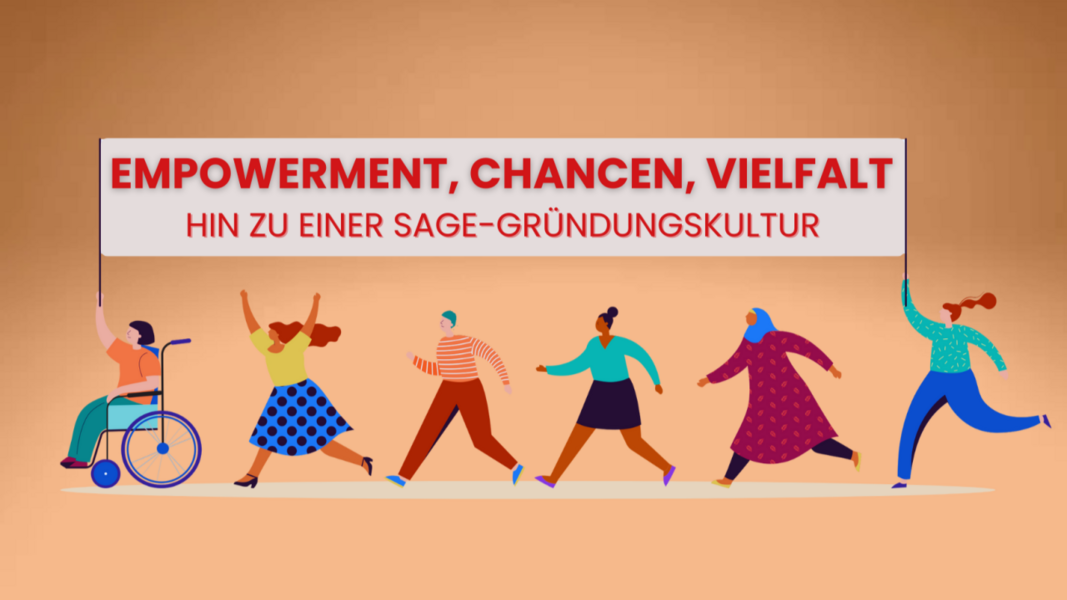
At the end of October 2024, the inspiring final event of the ASHEXIST and EXIST-Women projects took place at Alice Salomon University Berlin. Under the motto "Towards a SAGE start-up culture: empowerment, opportunities, diversity", the day was all about the social relevance of self-employment and social entrepreneurship, attracting numerous students, female founders, project supporters and interested parties who are enthusiastic about alternative career paths, entrepreneurial challenges and the transformative power of (social) start-ups.
Opening words and background to the project
The event kicked off with words of welcome from Prof. Dr. Gesine Bär, Vice President for Research, Cooperation and Continuing Education, and Prof. Dr. Uwe Bettig, Dean of Faculty II and project manager of ASHEXIST and EXIST-Women.
Uwe Bettig looked back on the origins of the projects, which are based on years of experience from Career Services and a needs analysis: This clearly showed a desire for alternative career paths, a stronger focus on self-employment and a growing interest in social entrepreneurial approaches.
Both speakers drew attention to structural challenges in the context of self-employment. For example, curricula at universities rarely prepare students specifically for possible self-employment. The academic start-up scene remains cis-male in many places. Especially in a university like ASH Berlin, with a high proportion of female students and students beyond the binary gender spectrum, there is great potential to provide new impetus and promote a more diverse start-up culture.
Panel discussion: Challenges and opportunities of a diverse start-up culture
A highlight of the day was the panel discussion with founders Nare Yesilyurt(Deta-Med), Anthony Owosekun(EMPOCA) and Manfred Radermacher(Enterability). The three spoke openly about their start-up journeys and gave practical insights and tips.
Starting a business also means perseverance - or, as one panel guest put it: "Entrepreneurship is a marathon." In addition to resilience, successful communication and a conscious approach to finances are key skills on the path to self-employment. Setbacks are just as much a part of this as the small and big successes.
The three panel guests impressed the audience with their diverse entrepreneurial activities: from setting up a culturally sensitive care service, to a nature education program for Black children and young people, to supporting over 600 people with disabilities on their path to self-employment.
The road to starting a business is often rocky - and even more so for people who experience multiple forms of discrimination. This makes target group-specific support services such as ASHEXIST all the more important, as they start exactly where conventional structures often do not work. They open up new perspectives and promote self-determination.
Interactive workshops and collaborative design
At lunchtime, interactive group workshops offered space for active exchange and joint further thinking. Participants were invited to get involved, share their experiences and develop visions for a diverse SAGE start-up culture. Three thematically different workshops offered different perspectives and focuses:
- "Zukunftswerkstatt: The ASH Berlin start-up center as part of a co-creative and social-innovative ecosystem": this participatory workshop developed ideas for a vibrant, inclusive start-up center at ASH Berlin after the ASHEXIST project comes to an end. The focus was on the following questions: What could a start-up location that promotes social innovation look like? And what structures are needed to support students in the long term?
- "Fear of the future and self-empowerment - start-up perspectives for queer students": This workshop focused on the experiences of queer students. It discussed the barriers that exist due to discrimination in the world of work - and the extent to which self-employment can be used as an empowering way to create professional freedom and safe spaces for oneself.
- "Professional perspectives and paths to self-employment in the SAGE sector": The focus here was on examining individual ideas of self-employment. The participants reflected on personal approaches, career options and specific requirements for start-ups in the fields of social work, employment, health and education. Practical tips rounded off the exchange.
Review and results: What ASHEXIST and EXIST-Women have achieved
In the afternoon, there was a review of the ASHEXIST (2020-2024) and EXIST-Women (2023-2024) projects, which have provided important impetus for a diverse start-up culture at ASH Berlin. ASHEXIST, funded as part of the BMWK's EXIST-Potentiale funding line, made it possible for the first time to establish sustainable structures to promote start-ups at the university. With the establishment of the start-up center, which opened in 2022 and was transferred to the university structure in 2024, a central contact point was created for students and employees interested in starting a business - with a special focus on SAGE start-ups (social work, health, education & training), female entrepreneurship and social entrepreneurship.
Through consultations, workshops, mentoring, networking events and the integration of start-up topics into teaching, a broad awareness of self-employment was achieved. Particularly noteworthy are:
- the individual start-up advice and coaching that accompanied students on their way,
- a practice-oriented workshop program, target group-specific event formats and talks, including specially developed qualifications for women*,
- cooperation events with partners such as SEND e.V., Gründerinnenzentale, Berliner Hochschule für Technik, Paritätischer Wohlfahrtsverband, Gesundheitscampus am ukb e.V. and more.
- the involvement of role models who gave personal insights as speakers, offered orientation and encouraged
- as well as the anchoring of social entrepreneurship in teaching, e.g. through new elective modules and further training for teachers.
The publications developed also contributed to visibility - including the first academic handbook on social entrepreneurship in Germany and practical guides ("Paths to self-employment", "Funding and financing") that students can use.
With the symposium and barcamp in November 2023, ASH Berlin became visible nationwide as a pioneer in the fields of social entrepreneurship and SAGE start-ups and brought together stakeholders from academia, practice and politics. The project not only created new structures, but also initiated a debate on how universities can contribute to the promotion of a diverse start-up culture geared towards the common good.
A special moment of the day was the presentation of innovative start-up ideas by participants of the EXIST Women program. In short pitches, they showed how they were motivated by the project to pursue their own entrepreneurial paths. Jasmin Brückner (M.A. Biographical and Creative Writing graduate) presented her path as an artist, copywriter and workshop leader in an impressive spoken word performance - giving a very personal insight into creative self-employment. Mian Rühl (M.Sc. Management and Quality Development in Healthcare) presented a start-up project for FLINTA-specific physiotherapy services - a project that makes gaps in care visible and addresses them in a targeted manner.
A special shout-out goes to Melisa Kalayci and Sabrina Zanella, a team from the EXIST Women program at ASH Berlin, who are working on a shared flat for children and young people with cancer to promote their best possible reintegration into everyday life and counteract late effects. They impressed the audience with their start-up idea at the German Start-up and Entrepreneur Days (deGUT) 2024 and won the audience award at the "Gründerinnen: StartUp!" event. A strong signal for the creative and socially relevant start-up work that was initiated at ASH as part of EXIST-Women.
Afterwards, Dr. Katja von der Bey, Managing Director of WeiberWirtschaft eG, gave a keynote speech on the topic of "Female founder-friendly university". The starting point was the "InnoGründerinnen" project of the nationwide gründerinnenagentur (bga), which used quantitative and qualitative data to analyze how universities should be structurally set up to specifically support women in the start-up phase. Dr. von der Bey showed how targeted offers, diversity-sensitive structures and role models can help to create an environment in which women* are motivated to develop and implement their own start-up ideas. Best practice examples illustrated what a female founder-friendly university culture can look like in concrete terms.
At the end of the event, Dr. Philipp Kenel gave an outlook on the time after ASHEXIST. The focus was on the next steps for a diverse and discrimination-sensitive start-up culture at ASH Berlin. For example, basic funding for target group-specific support when starting a business is to be continued and expanded again in the medium term via a larger third-party funding program. In addition, ASH Berlin is actively involved in the UNITE joint application by Berlin and Brandenburg universities to strengthen joint start-up activities.
As part of the transfer audit, which ASH Berlin underwent together with the Stifterverband, specific recommendations were formulated for the university - including the examination of a professorship for social entrepreneurship and the development of a corresponding degree program.
In addition to these long-term perspectives, short-term goals must now be tackled with determination: securing and anchoring central services - such as advice, awareness-raising and training - as well as sustainable support for project developments and spin-offs by university members. The aim is not only to contribute to ASH Berlin's attractiveness as a university, but also to further strengthen its role as a socially relevant player in the start-up context. With its specialization in start-ups in the SAGE sector, by women* and other underrepresented groups, it occupies a unique position within the nationwide start-up landscape. This profile should be further sharpened and communicated to the public.
Especially in socially challenging times - in which state funding programs such as EXIST potential are coming to an end, the budget situation is tense and no permanent institutional funding is in sight - commitment, partnerships and visibility are needed. For this reason, an explicit appeal was made to the network partners present.
The event ended in an open and networking atmosphere. At the end, participants had the opportunity to discuss what they had heard and experienced in more depth, make new contacts and forge plans for the future.
Epilogue: Remaining optimistic in difficult times
With its clear profile in the areas of SAGE start-ups, female entrepreneurship and social entrepreneurship, the Start-up Center at ASH Berlin plays a special role in the regional, national and even international university landscape. It addresses underrepresented areas with great social potential. Especially in the context of skills shortages, demographic change and growing societal challenges, social innovations and SAGE start-ups are more important than ever.
But this progress is at risk. Due to the cuts announced by the Berlin Senate at the end of November 2024 and the resulting savings at the university, the start-up center will have to accept massive restrictions. Since January 2025, it has only been represented by a part-time "Social Entrepreneurship and Intrapreneurship" position - the direct contact person for students interested in starting a business is no longer available. This means that central services that have been specifically developed in recent years are at risk.
But these services are needed right now. In a time of multiple crises, the desire - or even the necessity - to pursue self-determined career paths is growing for many. The pressure on working conditions in the SAGE professions is increasing noticeably, and many employees will have to reorient themselves or look for new prospects. Students who are confronted with structural disadvantages or (multiple) discrimination are particularly challenged.
This makes it all the more important for universities to open up spaces in which students are not only prepared for dependent employment, but can also actively shape their own career paths.
This is precisely where the ASH Berlin start-up center could come in: through encouragement, empowerment and support - with low-threshold, discrimination-sensitive services, targeted advice and a network of role models and supporters. In the spirit of Alice Salomon, who campaigned for social justice and the professional independence of women throughout her life, the university should also offer a vision of self-empowerment and creative freedom. These structures are needed right now. Right now, ASH Berlin is needed as an enabling space for new paths in work and society.
Philipp Kenel, Uwe Bettig, Melanie Akerboom, Jutta Overmann, Lena Boderke
Finally, we would like to give a voice to those who matter, here are some voices from students in the seminar "Specialization in Social Economics and Social Management", B.A. Social Work, 4th semester:
"Social work is by no means a field with little hierarchy. In the social worker - recipient relationship, unfortunately anyway, but also among social workers: Everywhere I've worked so far, there's been a manager who hardly knows anything about the day-to-day practice of the job and still makes the important decisions. These were often endo-cis men, with significantly less practical experience than the (other) employees, mostly FLINTA*s (= women, lesbians, inter*, non-binary, trans* and agender people). They often made decisions that did not make sense and did not address structural problems that we encountered on a daily basis. By founding a business, we have the potential to create a less hierarchical structure. This would go hand in hand with a better working atmosphere, the inclusion of more empirical knowledge in decision-making and the burden on the manager would also be reduced if responsibility was better distributed. Of course, this is not the case for every business start-up; on the contrary, another hierarchical company can also be set up, depending on the person(s) setting up the business. But at the very least, starting a business offers the opportunity to do things differently."
"In the future workshop for queer students, for example, we talked about how queer hostility in the workplace is a burden and that self-employment also offers an opportunity to make your own job more secure in this aspect."
"Starting a business in social work offers an opportunity to improve the working conditions of social workers and adapt them to individual needs, as well as to shape the work itself according to one's own values, e.g. to work according to critical approaches and to go into fields of work that are not or hardly explored. Both the working conditions and the content of social work are highly relevant to society."
"What does all this mean for me now? After my Bachelor's degree in Social Work, I will really start my professional life. Either I apply for a job or I start a business."
"Starting a business in social work enables you to open up new fields of work and thus tackle social problems that would otherwise not be addressed by social workers. This was the main motivation of all three participants in the panel discussion and the companies they represent. They deal with the problems: Barriers to business start-ups for people with severe disabilities (Enterability), gaps in care provision for migrants* in Germany (Data-Med) and barriers for Black youth in natural spaces and lack of empowerment spaces (EMPOCA). Specific services in particular, which require specific knowledge, are often not addressed by the large providers. People who have this knowledge due to their personal experience and/or specialization in training can develop very specific, suitable offers by setting up a business. From this point of view in particular, the promotion of business start-ups, such as that provided by ASHEXIST and EXIST-Women, is highly relevant at a social level."
"The example of Nare Yesilyurt, who founded the company "Deta-Med" based on formative personal experiences, highlights relevant social work issues. Nare pursues two ideas in her company to integrate migrants into the German healthcare system. With culturally specific care, Deta-Med offers caring family members support and relief in order to close the care gap for migrants in outpatient care. Nare is also committed to integration and training opportunities for women. In social work, the empowerment approach is very central and it serves this through targeted support services that can enable people to lead a self-determined life."
"Another example is the "EMPOCA" initiative by Anthony Owosekun. The idea behind EMPOCA is to connect young black people with nature and get them excited about climate protection. The relevance for social work can be seen in the fact that the empowerment approach is also used here and marginalized groups, especially black children and young people, are strengthened in their personality through their connection with the environment and their social integration is supported."
"Manfred Radermacher's specialist self-employment integration service "Enterability" helps people with severe disabilities to become self-employed and supports people with severe disabilities who are already self-employed to survive on the market in the long term."
"Anthony addresses the lack of representation of Black people in natural spaces and creates access to this area, which is intended to reduce inequalities and promote equality. The initiative also contributes to Black people being recognized as actors in climate action. Anthony also shows how important it is to design work and educational spaces that are critical of racism in order to promote diversity and social cohesion.
The example of Manfred clearly shows how the project contributes to raising social awareness and reducing prejudice, and strengthens the visibility of people with disabilities in the economy. In this way, Enterability makes an important contribution to social justice and inclusion."
"In summary, the start-ups of the people mentioned show how entrepreneurial activity can be combined with social work objectives. Their work is an example of how both individuals and society can benefit from education, integration and empowerment. For society and for social work, this work contributes to raising awareness and dismantling discriminatory structures and promotes social integration and equal opportunities."
"As we were able to see on October 30 at the closing event of ASHEXIST, using the example of the founders present, there are numerous gaps in the welfare system that are not covered by the state and the major providers. Start-ups create new opportunities for sustainable solutions to social challenges that go beyond the strategies of traditional providers. This expands the range of services offered by the social sector, making it more diverse and inclusive, especially for people who are systematically affected by discrimination."
"However, the social relevance of start-ups by marginalized groups goes far beyond individual economic independence. Such start-ups contribute significantly to the emergence of new empowerment structures that break down not only economic but also social barriers. When FLINTA* people and other people who are disadvantaged on the labor market set up their own companies, they create safe working and meeting spaces in which discrimination has no place. This not only promotes the personal development of the founders themselves, but also offers other people in similar situations new perspectives and opportunities."
"In the long term, the promotion of start-ups by FLINTA* people can also bring about structural changes in society. If more and more diverse companies achieve economic success, the pressure on established institutions to open up to more equality and inclusion will also increase. In addition, these companies are creating new structures in the labor market in which gender, origin or identity no longer determine opportunities, but where the focus is even more on skills, ideas and the will to change.
A key approach to promoting these developments is the targeted expansion of support structures. Specific funding programmes, low-threshold financing models and mentoring networks for marginalized founders can help to compensate for structural disadvantages and increase the success rate of FLINTA*-led companies. Education also plays an important role: by integrating topics such as social innovation, inclusive entrepreneurship and sustainable forms of business into school and university curricula, young people can be made aware of alternative career paths at an early stage."
"These start-ups are often the result of a collaborative idea that arises from civil society involvement or social work. SSEs [social and solidarity economies] offer a suitable opportunity to transform these ideas into structures and organize them. Independent of state structures, it is possible to create one's own offer, which gives the founders the freedom to implement their goals without external guidelines. This impulsiveness and freedom of the SSEs offers a quick and creative response to the lack of solutions to social and ecological problems. In this way, SSEs contribute to the diversification of offerings by allowing new services or products to fill existing gaps."
"Another interesting aspect of SSEs is that they also arise from the specific needs of those affected by social disadvantage, which in turn represents an exciting approach for social work. An offer can be created that is provided by those affected for those affected, which enables the implementation of lifeworld orientation, a theory from social work. This theory focuses on the needs of the clients. The principle of action applies: the clients are experts in their own living environment. Furthermore, there is empowerment through the collective association to tackle social or ecological challenges as a group or movement. New possibilities for action are created that expand the traditional methods and approaches of social work.
Furthermore, SSEs can give civil society the opportunity to gain the capacity to act in a variety of ways. It is often perceived as difficult to tackle major social and ecological problems, which often leads to a feeling of helplessness. Through SSEs, people can tackle specific social problems together with other people and often feel the effects of their own actions. This collective action strengthens civil society, which provides social work with additional resources and networks. SSEs can also strengthen democratic processes in the form of social participation and make them more attractive."
"Another advantage of SSEs is that they are partially independent of funding, as they generate their own income and can therefore be self-financed in some cases. This makes it easier to achieve independence from the requirements of donors or the state and to make autonomous decisions."
