
How do ideas, data and experiences become concrete improvements in everyday university life and how can quality circles be closed in such a way that they enable continuous development? At ASH Berlin, an Integrated Quality Management (IQM) is being developed with precisely this aim in mind.
The aim is to systematically develop quality in studies and teaching, research and administration on the basis of a consistent application of the PDCA cycle - with clear processes, focused measures, transparent control and broad participation.
At the heart of this is a simple but crucial question: how are results from evaluations, feedback and projects used to create concrete improvements in measures and processes?
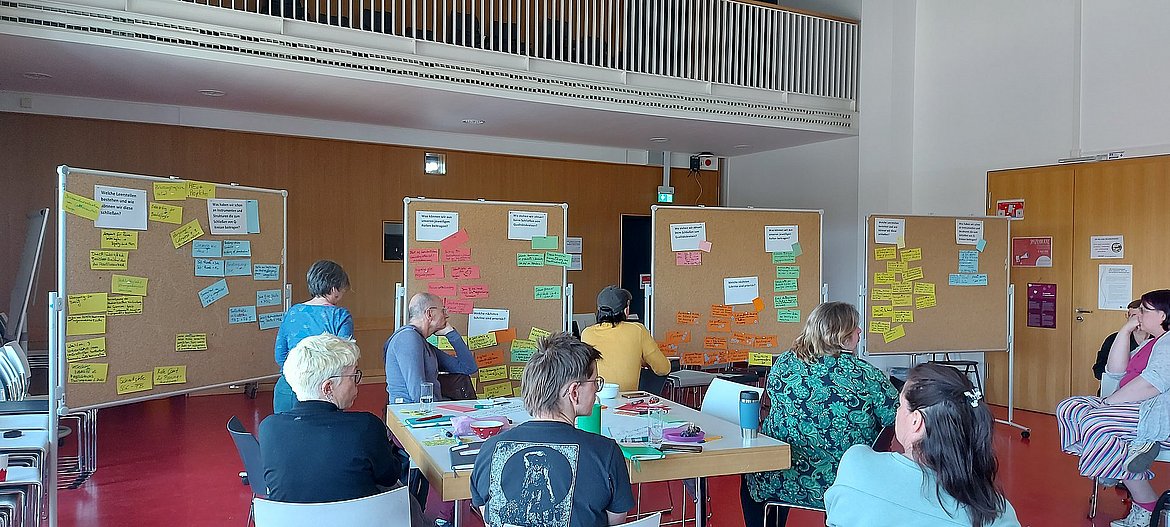
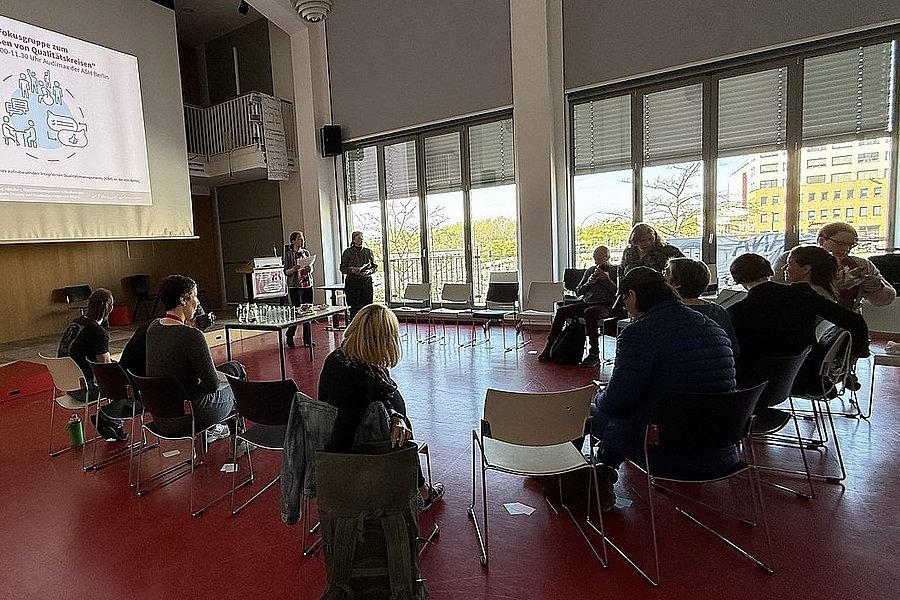
Focus group in April 2026
On April 27, 2026, representatives from various areas and member groups - students, service, technical and administrative staff, academic staff, teaching staff and deans - met in a focus group to discuss how existing quality assurance instruments can be better integrated and further developed.
The focus was on practical experience, identified hurdles and the question of what contribution the participants themselves can make to closing quality loops and what priorities should be set. The contributions are currently being evaluated and will form the basis for the next steps and initial considerations for a university-wide quality strategy.
Closing quality circles effectively
The orientation framework for IQM is the PDCA cycle (Plan - Do - Check - Act). It describes how goals become measures - and measures become verifiable improvements.
The PDCA cycle is a central control instrument in university quality management. It supports the continuous development of measures and processes in teaching and learning, research and administration and makes decisions transparent. However, it is only effective as a joint task.
The focus group identified the following key topics as priorities
- Digitalization: integrated tools and clear processes and communication channels
- Communication: transparent internal information flows, especially for students
- Participation: greater involvement of student perspectives
- Interface management: better coordination between departments
- Complaints management: systematic and transparent handling of feedback
- Admission: more flexible procedures to increase student numbers
Together, the topics aim to better combine existing approaches and close the quality cycle as a whole. In dialog, it is important to continue to work out how all members of the university can contribute from their special functions and roles to working on the topics and closing quality loops.
Outlook: University-wide dialog at the end of June
On 30 June 2026, the results of the focus group will be presented and jointly developed at a public university event in the Audimax, to which all university members are cordially invited.
The focus will be on the question of what the findings mean in concrete terms for closing quality circles and everyday working life - in the individual organizational units and for the university as a whole.
Short impulses and thematic exchange formats are planned in which priority measures and next steps will be developed together.
When and where?
Date: 30 June 2026
Time: 12:30-15:00
Location: Audimax
The IQM at ASH Berlin is designed as an open, dialog-oriented process. The focus group marks an important intermediate step. It will now be crucial to systematically follow up on the insights gained - and to derive joint measures with well-distributed steps and responsibilities that lead to tangible improvements in everyday university life.