

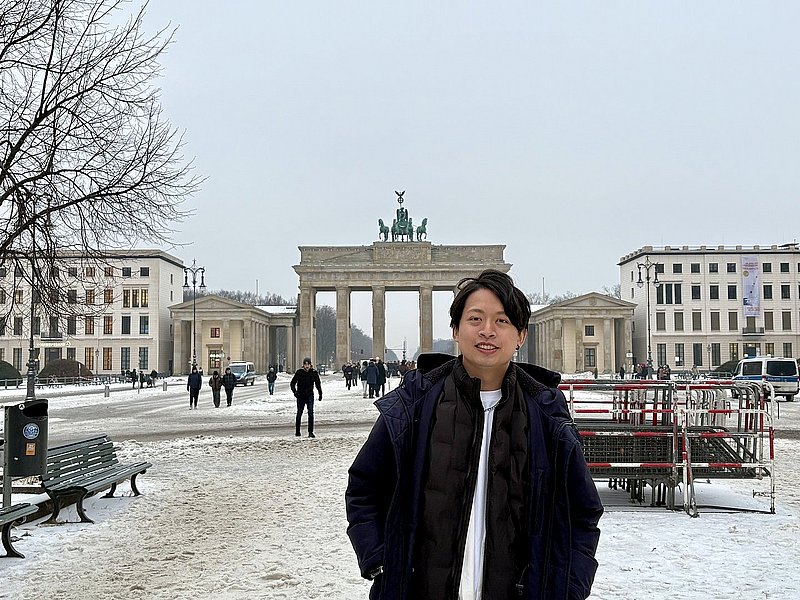
What is your name and where are you from?
My name is Sun Yu. I am from Taiwan, and during the exchange I was based at National Pingtung University (NPTU), located in southern Taiwan.
At which university do you normally study?
I study at National Pingtung University (NPTU), in the Graduate Program of Educational Psychology and Counseling. At the time of the exchange, I was in my fourth year of the master's program.
How did you come to participate in the exchange programme?
My interest in cross-cultural exchange dates back to my undergraduate years, when I served as a teaching assistant for the International Students Service Learning program, helping hundreds of international and exchange students adapt to life in Taiwan. Although the COVID-19 pandemic prevented me from going abroad during my bachelor's degree, that experience planted the seed. During my master's program, I had the opportunity to travel to Seattle, USA, as a research assistant to present at the American Psychological Association (APA) Annual Convention in 2024. That experience, which connects with psychologists and people from many different countries, made me even more eager to immerse myself in another culture for an extended period. Thus, I applied for the exchange semester in NPTU. ASH Berlin was my first choice from the very beginning: as a school deeply rooted in social justice, critical thinking about race and migration, and a rich historical legacy in Berlin, it aligned perfectly with my professional interests in counseling psychology, cultural diversity, and the support of marginalized populations. I am proud and grateful to have been selected, and to be the first student from NPTU to exchange at ASH Berlin.
What subjects did you take at ASH, and how do they differ from your regular courses?
I enrolled in three courses at ASH Berlin:
1. Counseling — Although listed as an undergraduate course, it was highly practice-oriented. Each week, we focused on topics chosen by the students, with role-play demonstrations and group discussions around real counseling situations.
2. Racism and Migration — This course explored racial critical theory, housing rights for migrants in Europe, colonialism, the erasure of borders, the Black Lives Matter movement, and the lived experiences of Turkish and Arab migrants in Germany. The professor also organized visits to Berlin museums related to the Cold War, post-war reconstruction, and social movements.
3. Gender and Queer — The course covered queer theory and Black feminism. Students shared how gender and queer topics are discussed in their home countries, and we visited a local LGBTQ+ museum in Berlin. In comparison to my courses in Taiwan, the content at ASH Berlin was much more socially and politically embedded.
How do you find the teaching style compared to your home university?
The teaching style at ASH Berlin was significantly more discussion-based and participatory than what I was accustomed to in Taiwan. Professors invited students to openly challenge ideas, share personal perspectives, and build knowledge together through dialogue. In Taiwan, the classroom dynamic tends to be more teacher-led, with students listening and taking notes. At ASH, it was normal for students to debate the professor's views, share lived experiences, and provide peer feedback — all in a respectful and non-judgmental way. For me, this was both challenging and deeply rewarding. I had to push myself to speak up in English, in a room where I was often the only Asian student, and to contribute meaningfully to topics I was encountering for the first time in a European context.
What cultural differences have you noticed in terms of the academic environment?
One major difference is the course registration timeline: in Germany, the confirmed course list and registration are only released and opend about three weeks before the semester starts. In Taiwan, we typically plan our courses much earlier. Also, German universities strongly encourage students to choose their own learning goals — at ASH, I could decide whether I wanted an attendance certificate or a graded academic transcript. This flexibility reflects a deeper respect for student autonomy. Beyond scheduling, the classroom culture values equal voice: every student's perspective is treated with respect regardless of background, nationality, or fluency. As an international student from Asia, I was often encouraged to share the Taiwanese or East Asian perspective on social issues. This kind of bilateral exchange enriched everyone's learning.
Can you tell us about your daily life? How do your days compare to your home country?
Daily life in Berlin was both more independent and more socially dynamic than my life in Taiwan. I lived in a student dormitory called ‘’Victor Jara’’, which is managed by studierendenWERK BERLIN, about 40 minutes by public transit from the ASH campus. My days typically involved attending classes, preparing course readings, exploring Berlin's many museums (almost all of which were free), and socializing with fellow exchange students from 13 different countries. In Taiwan, my routine was more study-focused with fewer spontaneous social activities. In Berlin, daily life itself was an education — every conversation, every meal cooked together, every museum visit added new dimensions to my understanding of the world.
What activities have you explored at the campus?
I participated in the orientation organized by the ASH International Office, which introduced the school's history, campus facilities, and course registration procedures. I also joined the Night Out event organized by the International Office at the beginning of the semester, which was a wonderful way to meet other exchange students. Throughout the semester, I organized and participated in House Cooking events where students from different countries cooked traditional dishes together — we prepared Taiwanese braised pork rice, tomato and egg stir-fry, popcorn chicken, and even sugar-coated haws, while Belgian friends made slow-braised beef, and Italian friends made authentic pasta. I also joined a City Walk organized by ESN, attended Berlin's Festival of Lights (Lichterfest) with German and exchange student friends, and visited Christmas markets with hot mulled wine (Glühwein) throughout the winter season.
How is the atmosphere on campus compared to your home university?
The atmosphere at ASH Berlin felt distinctly inclusive, activist-oriented, and historically aware. The school's motto and ethos — rooted in Alice Salomon's legacy of fighting for gender equality, social justice, and the rights of the marginalized — permeates the campus culture. Students and faculty alike engage actively with social and political issues. At NPTU, the campus atmosphere is warm and community-oriented, but less explicitly politically engaged. At ASH, it felt natural to discuss racism, migration, queer rights, and historical trauma not just in the classroom, but throughout everyday campus interactions. The diversity of nationalities and backgrounds on campus — both among exchange students and local students — made every day feel like a cross-cultural learning opportunity.
How did your language skills develop during the exchange program?
My English skills improved dramatically. When I arrived, I could understand conversations well but struggled to respond quickly, as I was still mentally translating from Chinese. By mid-semester, I could think and respond in English more fluidly, and by the end, I felt genuinely comfortable holding extended academic discussions, giving feedback in class, and socializing entirely in English. I also began learning German. I audited a German language course and self-studied, reaching a basic conversational level. Living in East Berlin — where English is sometimes less universally spoken — motivated me to pick up enough German to navigate daily life and understand the gist of conversations around me.
Were there any language challenges and how did you deal with them?
The biggest challenge was engaging in real-time academic discussions in English on topics I had never studied in English before — race theory, queer feminism, migration law. In the beginning, I would often understand the content but miss the window to respond in time. I dealt with this by doing extra preparation before each class: reading the assigned texts carefully, looking up key vocabulary, and mentally preparing what I might want to contribute. I also pushed myself to speak even when I felt uncertain, knowing that the classroom environment at ASH was supportive and non-judgmental. Over time, the discomfort faded and fluency followed.
What were the biggest cultural differences you faced — and how did you deal with them?
The most significant cultural shift was around individualism and directness. Most European students are very comfortable expressing their opinions, setting boundaries, and engaging in open debate. This was quite different from the more consensus-oriented and harmony-focused social norms I grew up with in Taiwan. Another difference was the social culture around Späti bars and nightlife. For European students, spending evenings at a Späti (Berlin's unique convenience-store-meets-bar concept), a pub, or a club is a completely ordinary social activity — similar to how Taiwanese people might meet at a café. I was initially unfamiliar with this lifestyle, but my European friends were patient and welcoming in introducing me to their social world, and I gradually embraced it with an open mind. I dealt with these differences by approaching them with curiosity rather than judgment, sharing my own cultural background in return, and allowing myself to step outside my comfort zone.
Were there any special customs or traditions at ASH / in Berlin/Germany that impressed you?
Berlin's culture of Erinnerungskultur (memory culture) left a deep impression on me. The city does not shy away from its darkest chapters — the Nazi persecution of Jewish people, the Berlin Wall, Cold War division. Stolpersteine (stumbling stones) are embedded in sidewalks throughout the city to commemorate victims of the Holocaust; remnants of the Wall are preserved; museums like the Topography of Terror present difficult history without sanitizing it. At ASH specifically, the naming of the school after Alice Salomon — a Jewish woman and feminist pioneer who was expelled by the Nazis — is itself a statement of institutional memory and commitment. Receiving a canvas tote bag printed with Alice Salomon's portrait at the orientation welcome pack felt symbolic: the school is not just named after her; it actively carries forward her spirit.The long German Christmas season also charmed me — Christmas markets (Weihnachtsmärkte) begin in late November and continue through December, filling Berlin's squares and streets with lights, Glühwein, traditional crafts, and a warmth that counteracts the long dark winter.
What places did you visit during your exchange program and what did you particularly enjoy?
Beyond daily life in Berlin — exploring local museums, attending events, and immersing myself in the city's history — I made the most of being in Europe to travel as widely as I could.
My very first trip after landing in Europe was to Bavaria: I attended the world-famous Oktoberfest in Munich, visited the fairy-tale Neuschwanstein Castle, and spent a peaceful afternoon at Königssee (King's Lake). Afterwards, I explored other German cities — Frankfurt, Heidelberg, Hamburg, Bremen, Düsseldorf, and Dresden — and was struck by how distinct each city feels in terms of culture, landscape, and character, even within the same country.
Beyond Germany, I seized the chance to travel across Europe, visiting the Czech Republic, the United Kingdom, Switzerland, France, Italy, Vatican City, Hungary, Iceland, the Netherlands, Denmark, Finland, Sweden, Norway, Portugal, Spain, and Poland. Each country offered something different — in language, atmosphere, history, and people. Some trips were planned around visiting friends; others involved meeting up with Taiwanese friends who happened to be elsewhere in Europe at the same time. Planning each journey — researching transportation, accommodation, and local customs — was itself an education. And arriving in person at places I had only ever seen in textbooks or on the internet was deeply moving in a way that is hard to put into words.
Were there any particular travel experiences that left a lasting impression on you?
One thing that stayed with me throughout all my travels was the kindness of strangers. In every country I visited, daily life runs in the local language — and I was often completely lost when it came to signs, menus, or instructions. Whenever I found myself confused, I would look things up on my phone or simply turn to the nearest person and ask for help. More often than not, someone would step in — and even when we didn't share a common language, we found ways to communicate through gestures and expressions. The warmth I received in those small moments made me feel genuinely welcomed, and gave me the confidence to travel more freely and openly.
Some of the most memorable connections came from the most unexpected encounters. For instance, in Iceland, I got talking with a group of Brazilians who were working in Portugal — and when I later visited Porto, we met up at a bar and spent the evening sharing stories over drinks. Another highlight was reuniting in Barcelona with a Spanish friend I had met at ASH Berlin: many exchange students had already headed home by then, but I had decided to stay on and keep exploring Europe. Running into her in her home city, after sharing months of student life together in Berlin, was one of those moments that made the whole journey feel full circle.
For me, travel is made richer not just by the places, but by the people you meet along the way — and those unexpected human connections are what I remember most vividly.
How has the exchange influenced your personal development?
The exchange reshaped me on multiple levels. Practically, I became much more independent — managing visa applications, dormitory logistics, banking with Wise, navigating a new city — all without family or close friends nearby. Intellectually, my worldview expanded significantly: I began seeing issues like migration, racism, and gender not as distant "foreign" topics, but as lenses I can now apply to understanding Taiwanese society as well.Emotionally, perhaps the most unexpected growth was in self-confidence. European culture places great emphasis on recognizing individual worth and expressing appreciation openly. The warmth and affirmation I received from friends across many countries helped me embrace my own identity more fully. As my Dutch friend said to me on our last day together: "You're such a beautiful person with a beautiful personality. I'm so proud of you, so you should also be proud of yourself." I carry that with me.
Are there specific skills or insights that you have gained from this experience?
1. Cross-cultural sensitivity in counseling: My training in Taiwan gave me a foundation in sensitivity around gender and age. ASH Berlin added a deeper layer — an awareness of race, migration status, colonial history, and structural oppression as factors shaping a person's mental health and lived experience.
2. English-language counseling competence: For the first time, I engaged in counseling practice and discussion entirely in English. This built real professional confidence for future work with international clients.
3. Active participation and assertiveness: European academic culture pushed me to speak up, ask questions, and share my perspective even when uncertain. This communication style has become a natural part of how I now engage in professional settings.
4. Multicultural friendship and perspective-taking: Having close friends from Germany, Belgium, Japan, Italy, South Korea, Spain, Denmark, Austria, the Netherlands, and beyond has permanently expanded how I see human experience.
How do you think your time abroad will affect your future academic and professional career?
As I work toward becoming a licensed counseling psychologist in Taiwan, the experience at ASH Berlin has been formative. Counseling is fundamentally about meeting each person within their own cultural context — and having lived, studied, and built relationships in a deeply multicultural environment has made me a more capable, more empathetic, and more culturally humble clinician. I will bring back a broader set of conceptual tools that are rarely taught in Taiwanese counseling programs. These will enrich my work with clients who come from minority or marginalized backgrounds, as well as with clients who are themselves immigrants or foreigners in Taiwan. I also hope to contribute to the internationalization of counseling practice in Taiwan, perhaps through research or teaching that bridges Eastern and Western psychological perspectives.
Do you plan to maintain links with ASH Berlin?
Absolutely. ASH Berlin holds a special place for me — not only as the first exchange destination from NPTU, but as a community that genuinely shaped who I am. I hope to stay in contact with both the International Office and the friends and professors I met during my exchange. I would also love to be a resource for future NPTU students who are considering ASH Berlin, and to advocate for this exchange partnership at my home institution.
What advice would you give to other students thinking about participating in an exchange program?
Go — even if you feel uncertain or underprepared. The discomfort of stepping into the unknown is precisely what makes the experience so transformative. Be proactive about communication with the host institution. In my case, I exchanged dozens of emails with the ASH International Office to clarify every administrative detail — visa steps, course registration, dormitory arrangements. The administrative staff at ASH are efficient and helpful, but they often work part-time (around three days a week) and take extended breaks (they will let you know in advance). Plan ahead, ask early, and follow up. Be open socially. Some of the most meaningful learning happened not in classrooms but in kitchens cooking with friends from different countries, at Christmas markets, at Spätis, at farewell parties. Let yourself be curious about how others live.
Are there any tips or advice you wish you had known before your exchange?
1. Download the apps you need before you arrive: e.g. the BVG app for Berlin public transit.
2. Visit the free museums early and often. Berlin's historical museums are extraordinary and some are free for students. They will transform how you understand the courses you're taking and the city you're living in.
3. Trust yourself. You are more capable than you think and ASH Berlin is a wonderfully welcoming place to grow.
